

The corrugated board industry: production, technology and industrial applications | Fosber
How corrugated board is made: process, flutes and the role of industrial corrugator lines, automation and sustainability.
The corrugated board industry plays a key role in the global packaging market, providing solutions that combine strength, lightweight structure, versatility and sustainability. Corrugated board is widely used for transport packaging, product protection and retail display across numerous industrial sectors.
The corrugated board production process in industrial corrugator lines involves several stages that transform paper into a strong packaging material.
Corrugated board is manufactured through industrial corrugator lines, designed to transform paper sheets into structured board by means of a continuous process involving corrugation, bonding and drying.
What is corrugated board =
Corrugated board consists of one or more fluted paper mediums bonded to flat linerboards. This structure creates a material that is:
- strong and resistant to compression
- lightweight and easy to process
- adaptable to a wide range of packaging applications
Depending on end-use requirements, corrugated board can be produced in single, double or triple-wall configurations, using different flute profiles (B, C, E, F and micro-flutes) that influence thickness, rigidity and print quality.
Corrugated board production process =
Industrial corrugated board production is carried out on complete corrugator lines designed to ensure continuous operation, precision and consistent product quality.
The process typically includes:
- corrugating the paper medium using corrugating rolls
- applying adhesive to the flutes
- bonding the liners
- drying the board
- slitting and scoring phase
- quality control and board stacking
Each stage of the process directly affects board performance, surface quality and printability.
Corrugator lines and industrial corrugators =
Modern corrugator lines are complex systems integrating mechanical engineering, automation and digital process control. Industrial corrugators enable manufacturers to:
- increase productivity
- reduce paper waste
- improve energy efficiency
- maintain consistent quality at high operating speeds
Selecting the right corrugator line depends on several factors, including:
- board types and flute profiles
- production volumes
- required flexibility
- desired level of automation
Technology and innovation in the corrugated board industry =
In recent years, the corrugated board industry has undergone significant technological evolution. Advanced automation, digital monitoring and Industry 4.0 solutions have transformed corrugator lines into intelligent systems capable of optimizing production performance in real time.
Technology plays a crucial role in improving:
- product quality
- plant reliability and safety
- operational efficiency
- sustainability of corrugated board manufacturing
Corrugated board as a sustainable packaging solution =
Beyond its technical performance, corrugated board is valued for its environmental sustainability. Made primarily from renewable resources, eco friendly, green, it is recyclable and fully compatible with circular economy models.
For these reasons, corrugated board continues to be a strategic packaging solution for companies seeking efficient, responsible and future-oriented materials. It also remains the best alternative to plastic packaging!
> Discover how Fosber corrugator lines support the evolution of the corrugated board industry through advanced technology, innovation and industrial reliability
> Contact us to discuss your production requirements and discover the ideal corrugator configuration for your plant
3 (+1) Types of corrugated board
Single wall: one fluted medium sandwiched between two linerboards. It is lightweight and provides adequate protection for small or low-weight items.
Example: pizza boxes
Double wall: made of two layers of flutes combined with three linerboards. It is stronger than single wall board and offers increased protection.
Example: boxes for household appliances
Triple wall: composed of three layers of flutes alternated with four linerboards. It is extremely strong and durable, suitable for protecting heavy and bulky items.
Example: boxes for scooters or engines
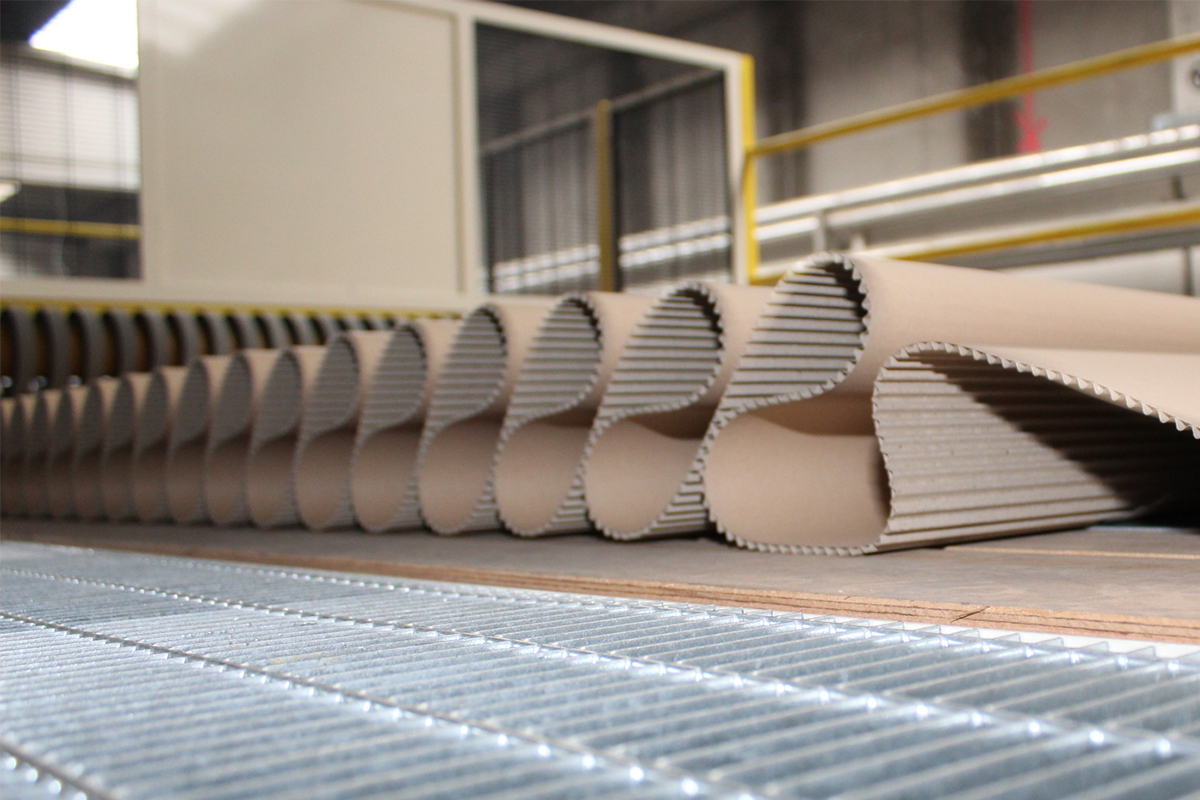
Bonus: Single face corrugated board.
Single face, also known as open flute, consists of one fluted medium bonded to a single linerboard. It is highly flexible, versatile and innovative, and is widely used for protective packaging and wrapping applications.
> Discover The Wavy, the latest innovation from Quantum Corrugated! It is a brand new line designed for the production of single face sheets
Frequently asked questions
FAQ
To better understand corrugated board and the technologies used in industrial production, here are some of the most common questions related to the manufacturing process and corrugator lines.
What is corrugated board?
Corrugated board is a packaging material made of one or more fluted paper layers bonded to flat linerboards. It is widely used in the packaging industry for its strength, lightweight structure and sustainability.
How is corrugated board produced?
Corrugated board is produced using industrial corrugator lines that transform paper into a structured material through corrugation, gluing, bonding, pressing, drying and cutting processes.
What is a corrugator line?
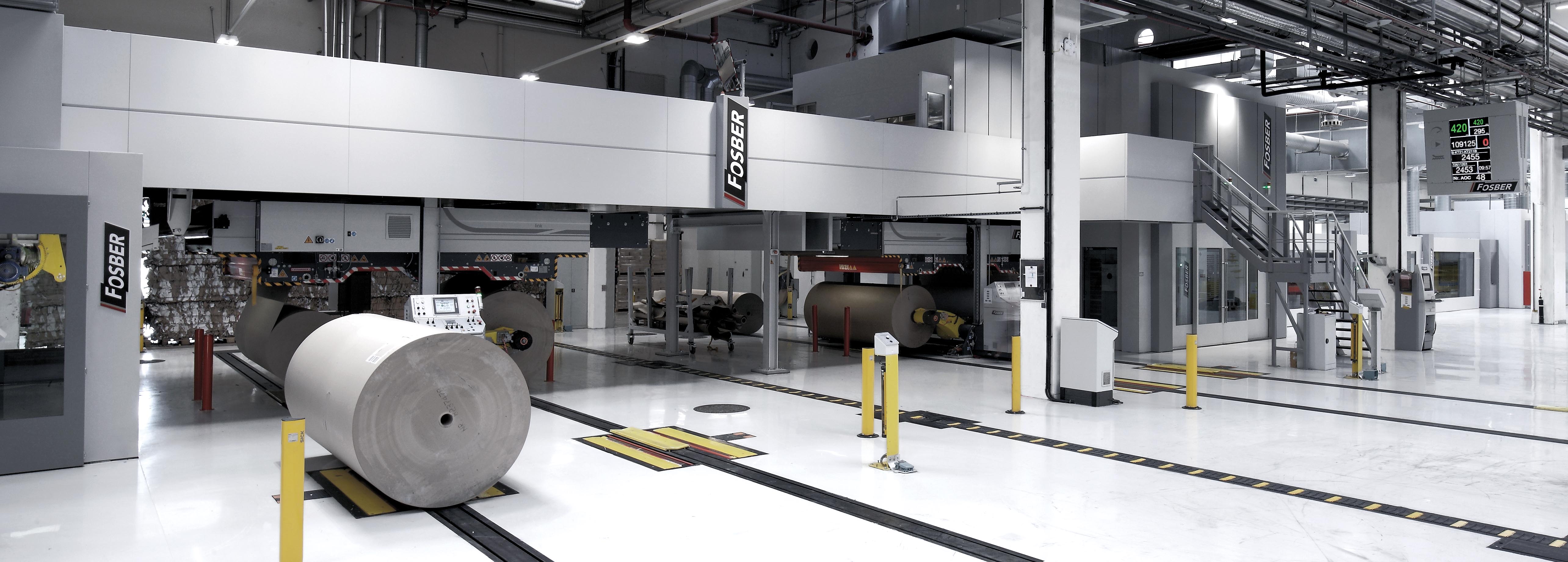
A corrugator line is an industrial system designed for continuous corrugated board production, integrating multiple machines and technologies to ensure high productivity and consistent quality.
What factors affect corrugated board quality?
Board quality depends on parameters such as temperature, pressure, moisture, adhesive application and machine configuration. Modern systems use digital control to optimise these variables.